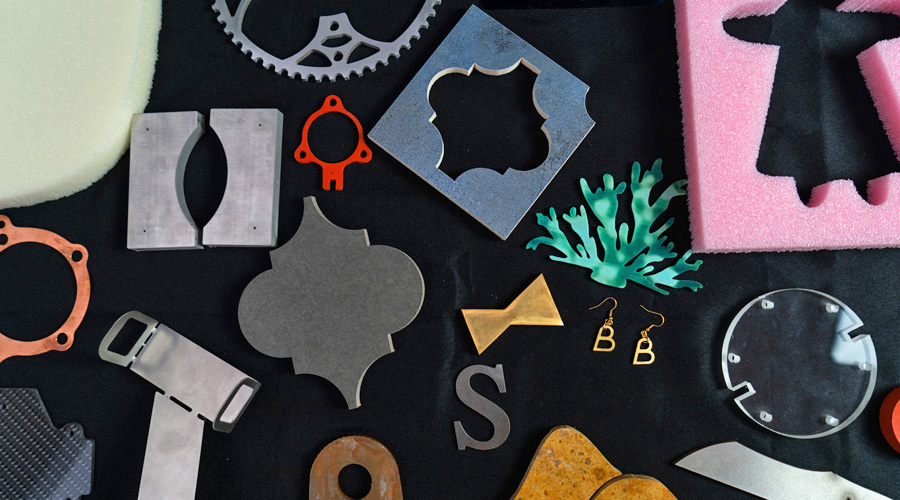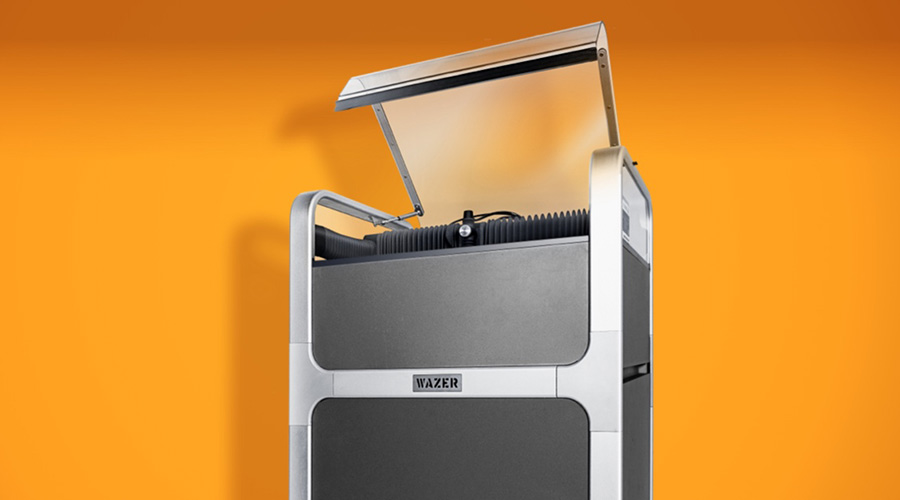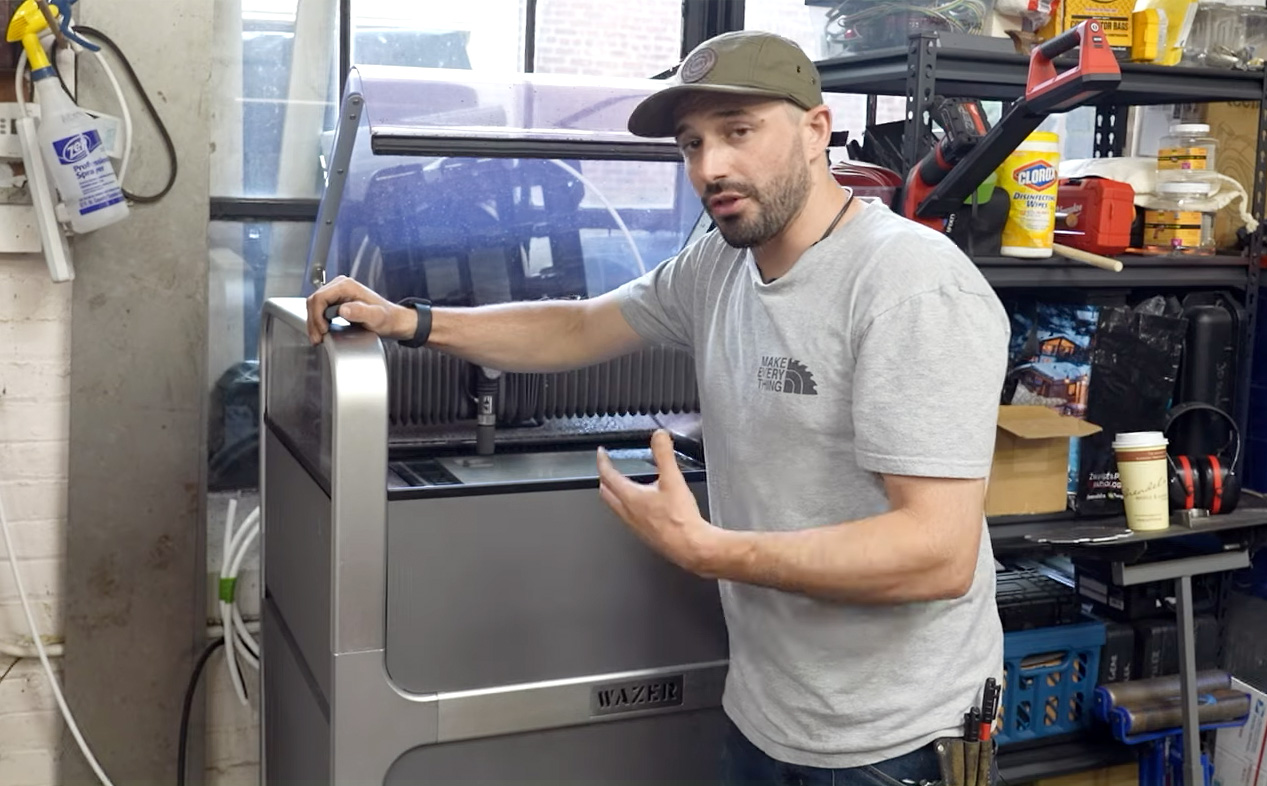
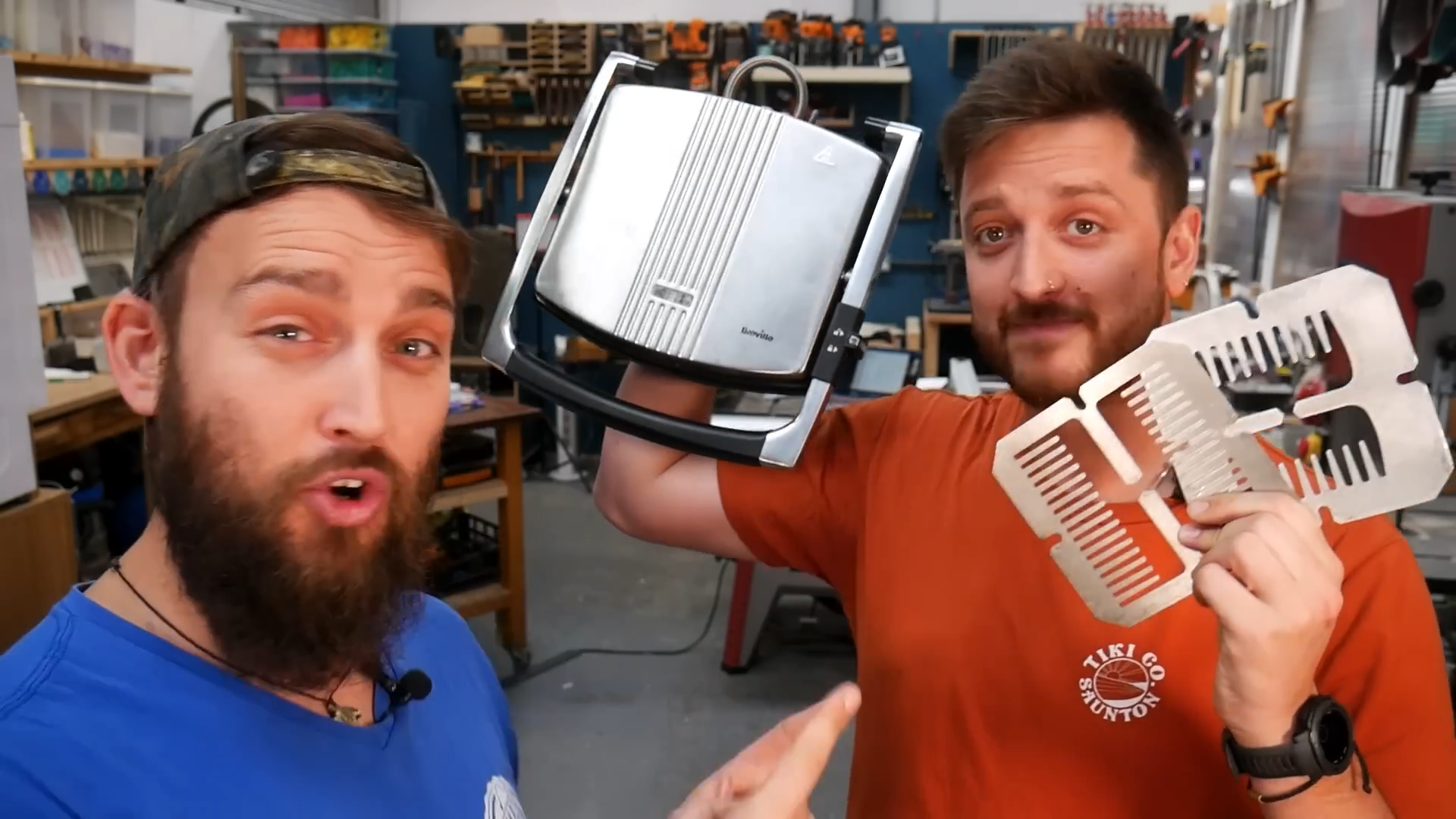
Brothers Make on YouTube offers an excellent case study in how small workshops can approach product development with the same logic and discipline used in manufacturing environments. Their projects consistently follow a structured path: begin with a simple prototype, validate the design using low-risk tooling, and scale only when the workflow and the market are ready. WAZER plays a central role in this middle stage, enabling precise, cost-effective steps that bridge the gap between early exploration and production.
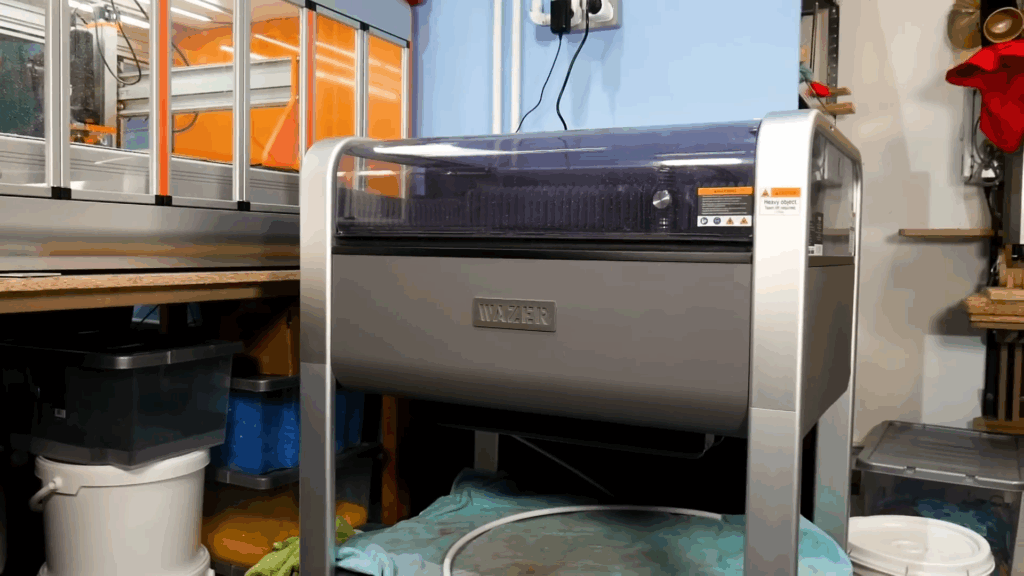
Recycled Plastic Combs: Understanding the Product Development Stages
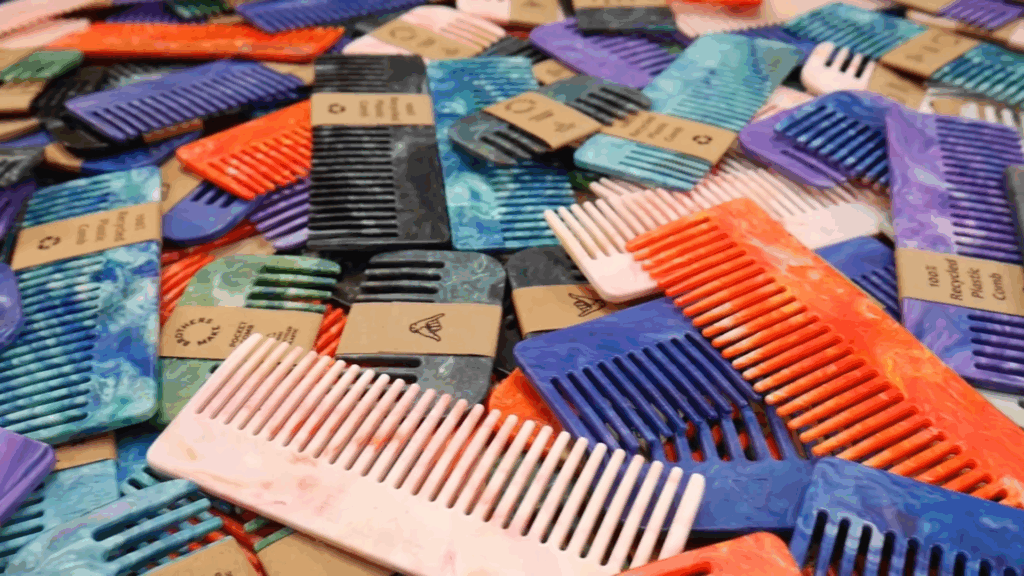
When developing their recycled plastic combs, Brothers Make begins at the most accessible end of the spectrum. Sheets of melted plastic are shaped and cut entirely by hand. While simple, this stage is critical. Cutting by hand makes it easy to experiment with tine spacing, overall shape, thickness, and aesthetic patterns without committing to specialized equipment or tooling.
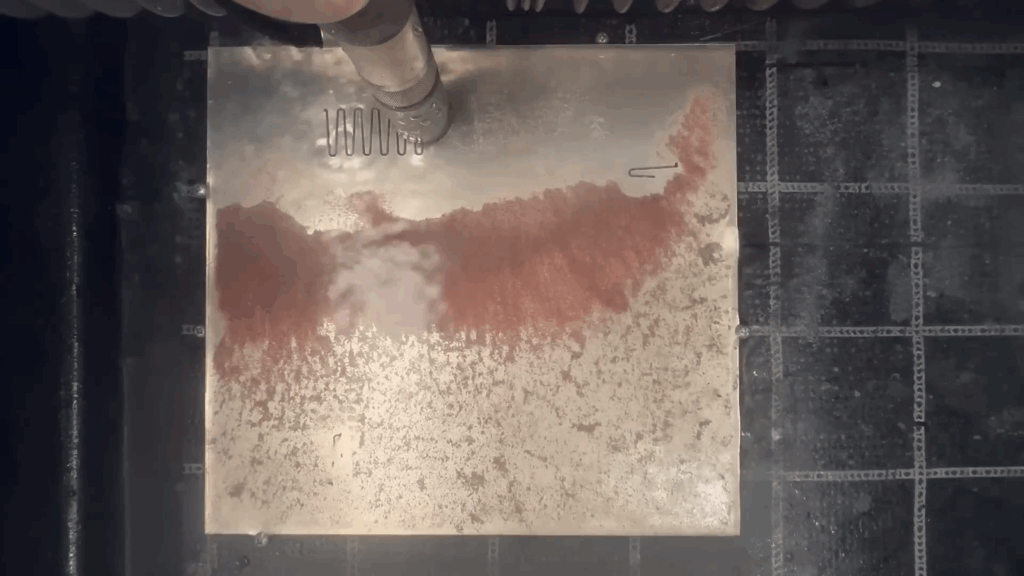
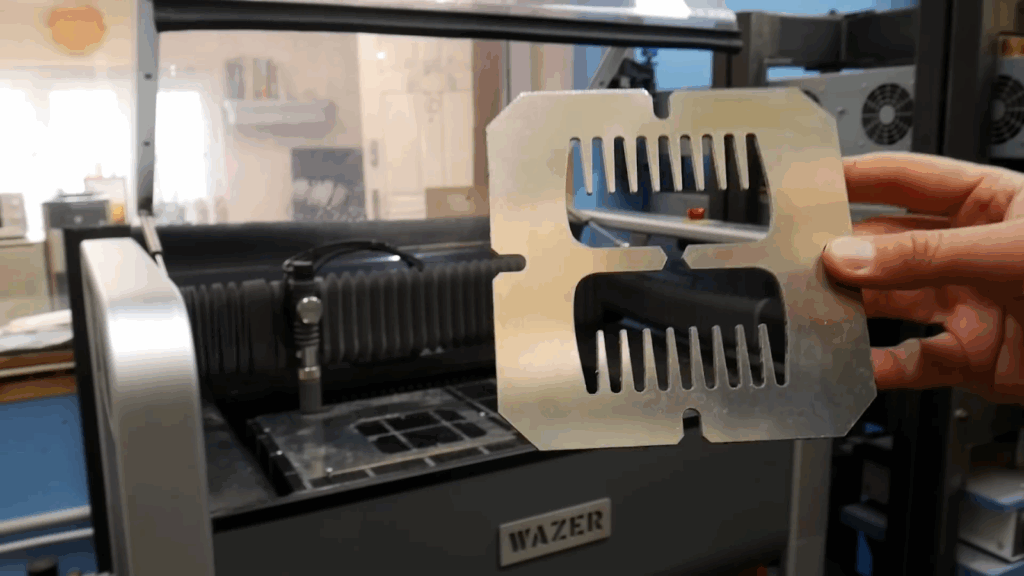
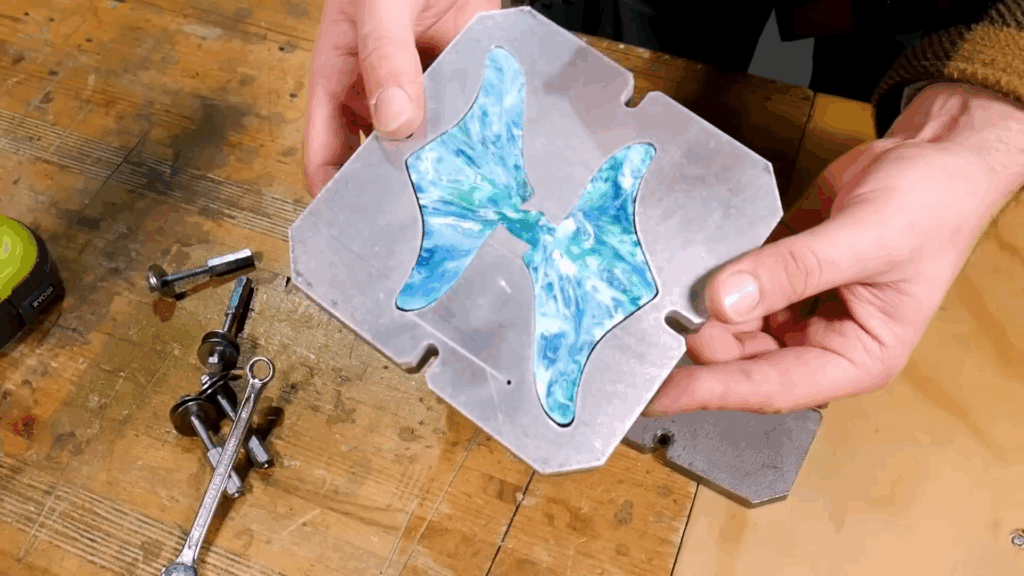
Once they are confident in the design, the focus shifts from exploration to validation. Instead of investing in a costly CNC-machined mold, they cut an aluminum mold on the WAZER. This waterjet-cut mold becomes their low-volume production tool and, at the same time, serves as a prototype mold to confirm that the part fills correctly, cools evenly, and ejects cleanly. This stage is where many products stall, because tooling is typically the most expensive part of early manufacturing. By creating the mold on the WAZER, they avoid committing thousands of dollars before they know the product will sell.
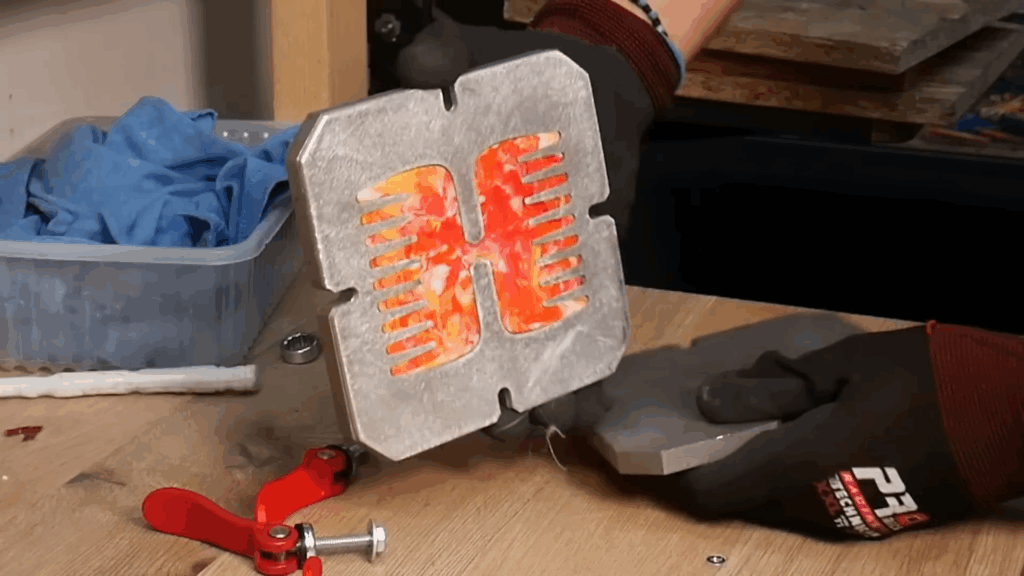
“We’re going to use our waterjet cutter to make a nice, simple mold that we can use to work out if people like these things.”
When demand is proven, they move to the final stage: a fully CNC-machined aluminum mold designed for higher-volume production. This mold offers finer details, improved surface finish, and multiple cavities. At this point, the investment makes sense because both the product and the market have already been validated.
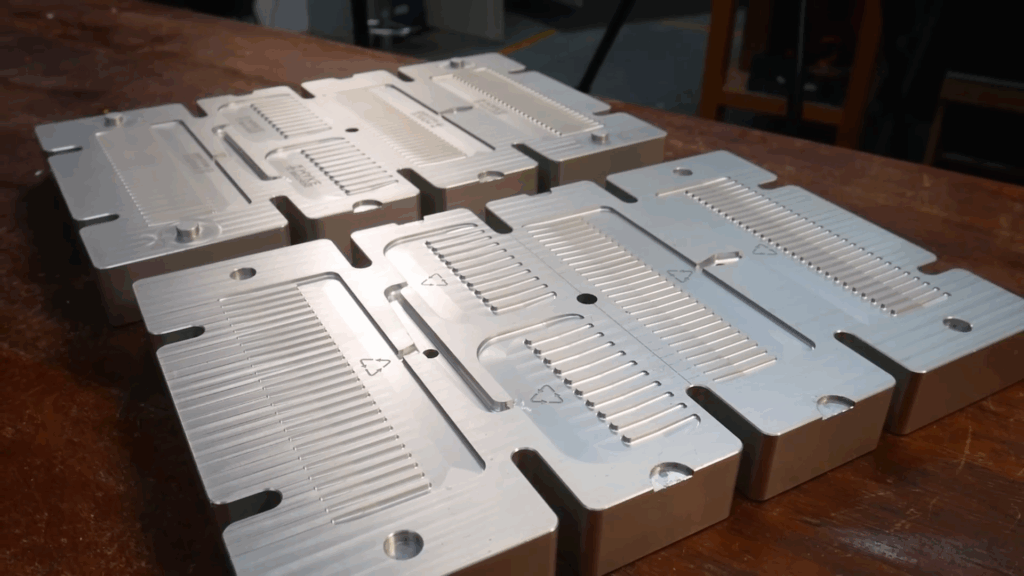
WAZER’s contribution to this workflow is a direct reflection of a common best practice in manufacturing: use low-cost, easily iterated tooling to derisk early stages. The waterjet-cut mold enables real-world testing and initial sales while keeping upfront costs low and flexibility high.
Stained Plastic Table: A Hybrid Manufacturing Workflow
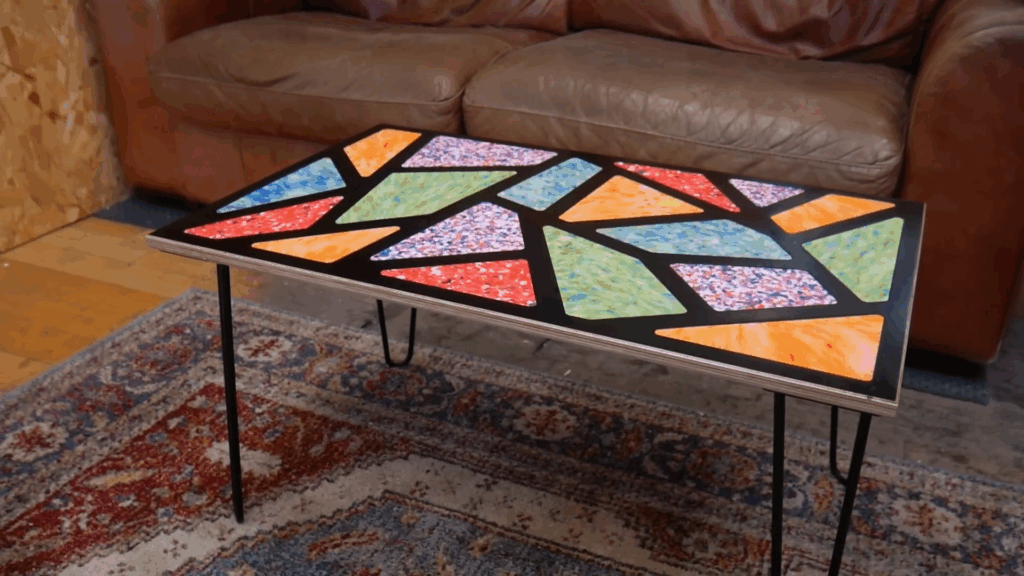
The stained-plastic table demonstrates how WAZER integrates into a multi-step manufacturing process. The wooden frame is shaped first, using a CNC router to cut a patterned surface where each pocket is machined to a consistent depth. These recesses will later hold the plastic tiles.
Next, the plastic sheets are produced by shredding polypropylene, melting it in a press, and forming it into large, flat panels. Because each sheet requires significant material preparation and energy, conserving every square centimeter matters.
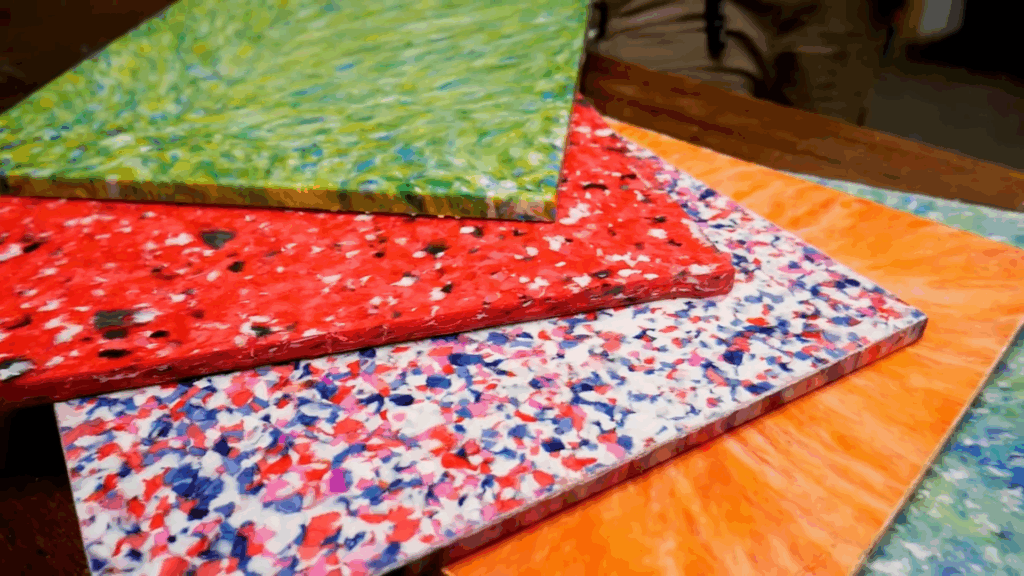
Cutting the final pieces on WAZER provides two key advantages.
“The main one being that the kerf cut is only 1.2 mil wide, meaning there’s a lot less waste produced.”
This is especially valuable when the material itself is handmade and labor-intensive. In addition, the waterjet’s precision produces clean, accurate edges that require virtually no post-processing. The tiles fit into the CNC-cut pockets without sanding, shaping, or adhesive, illustrating how CNC and WAZER complement each other when dimensional accuracy is important.
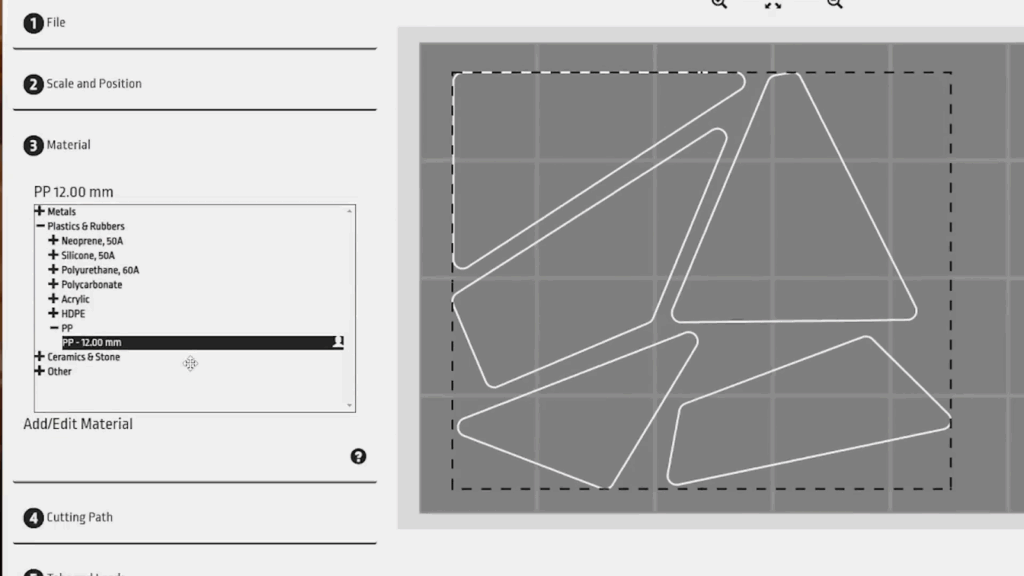
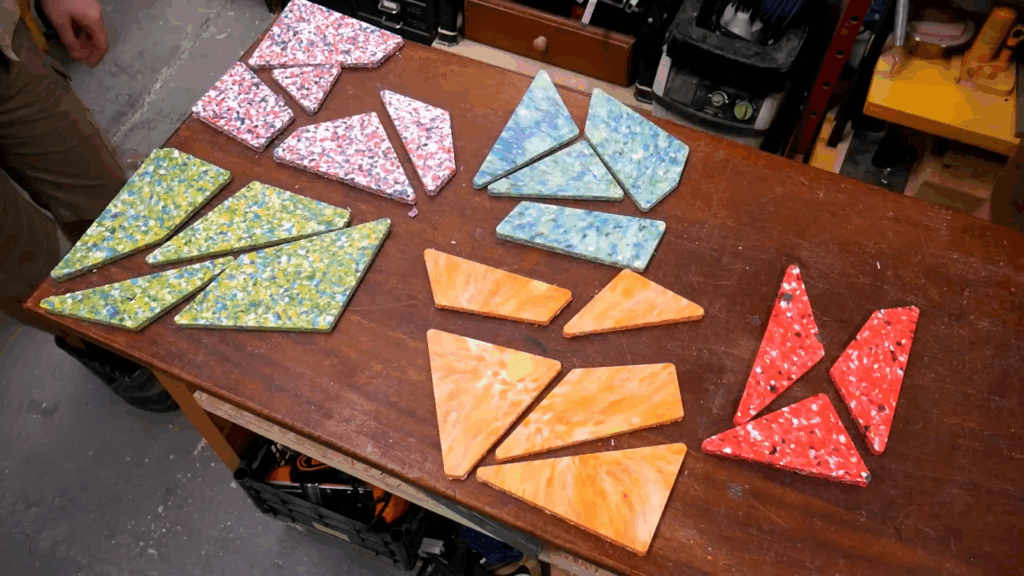
This workflow shows how combining processes—CNC routing for wood and waterjet cutting for plastic—can create a level of precision and finish that would be difficult to achieve with hand tools alone.
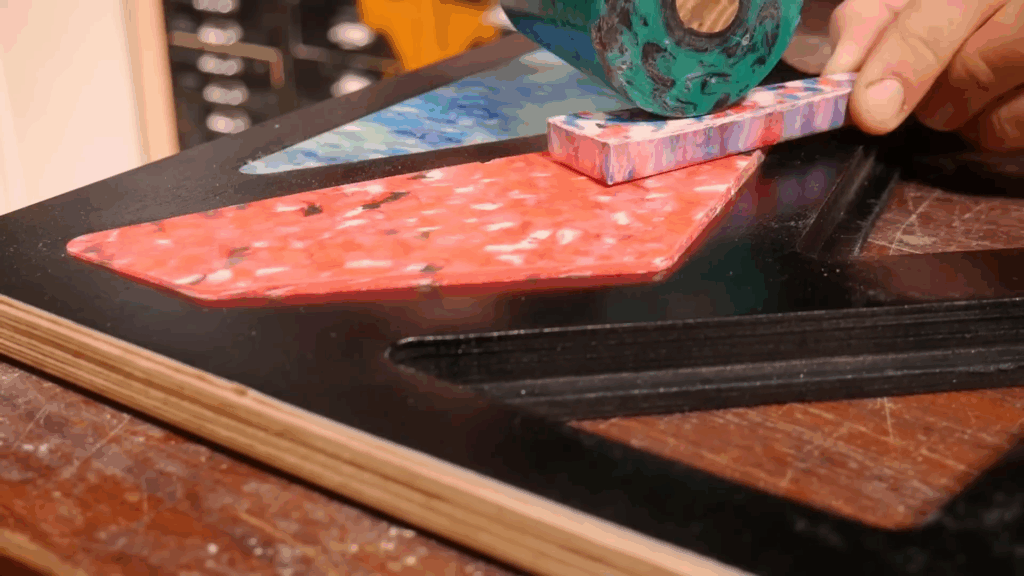
“We are very pleased to find that these pieces fit absolutely perfectly, with no need for glue or screws. We were a little bit nervous because we used two different machines to cut the same shapes, but it’s great to know that these are dialed in perfectly.“
Book Holder: Moving From CNC-Milled Parts to WAZER-Cut Tooling
In their book holder project, Brothers Make illustrates a shift from subtractive part-making to mold-based production. Their earlier method relied on CNC milling individual book holder pieces from plastic stock. While effective, CNC milling involves longer toolpaths, more material waste, and a one-part-at-a-time workflow that limits scalability.
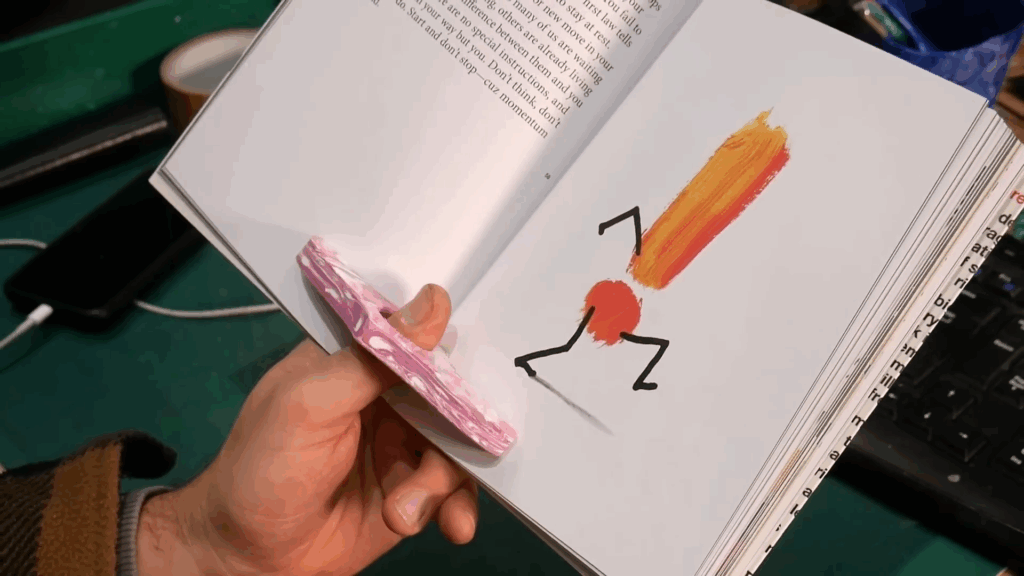
WAZER enables a different approach. Instead of machining each book holder directly, they cut a reusable aluminum mold that can be used repeatedly in their injection molding machine. Producing the mold on the waterjet is significantly faster than milling the equivalent geometry, especially because the waterjet is not restricted by end mill diameter, step-down limits, or tool wear. The process is straightforward: export the part profile, load the aluminum plate, and cut the mold layers in a single pass.
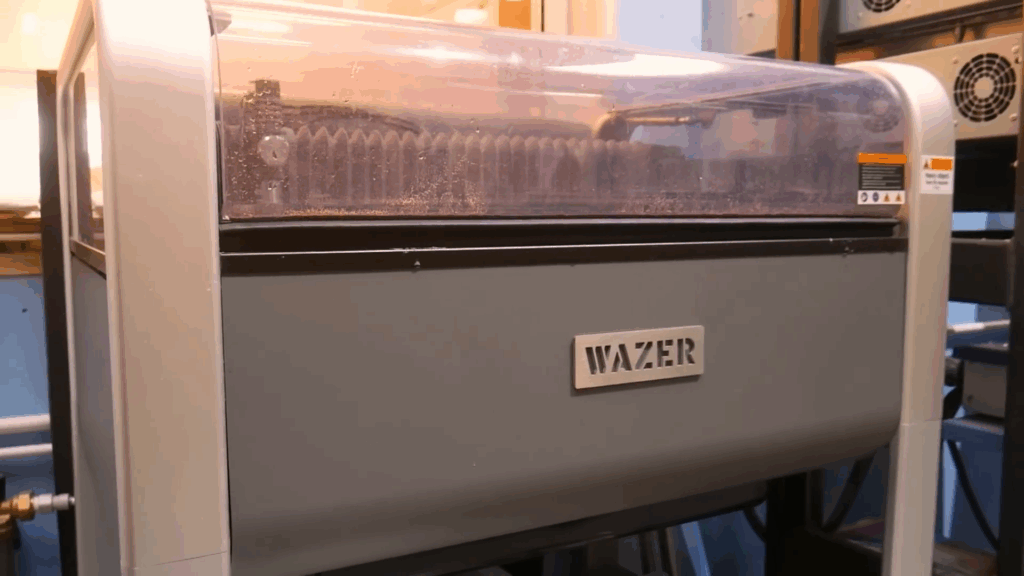
This mold-based workflow also creates far less waste than milling entire book holders from solid stock. Once the mold is made, producing additional book holders requires only shredded plastic and a single injection cycle, rather than repeating a long CNC program for every part.
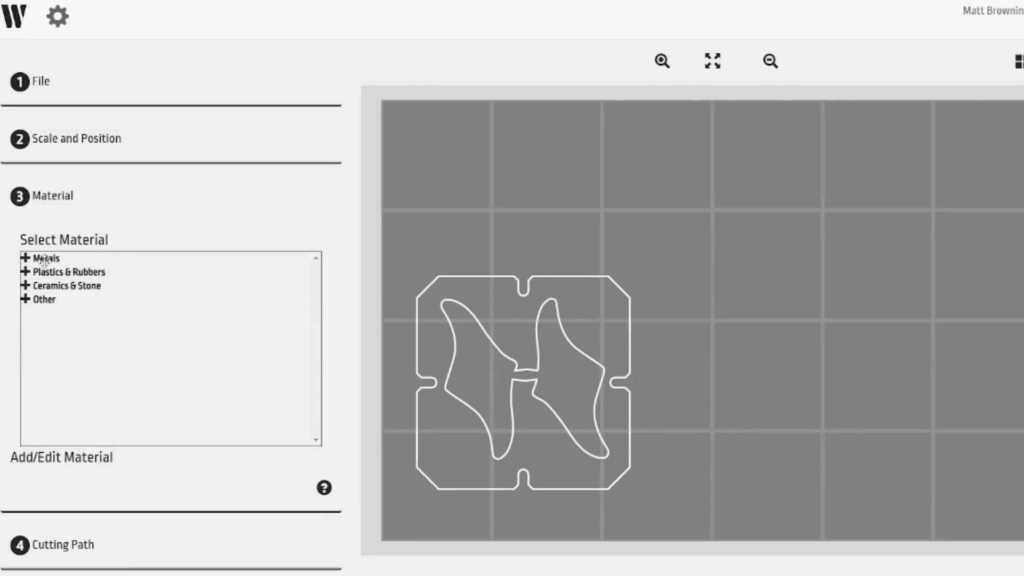
By comparing the two approaches, CNC-milling finished pieces versus waterjet-cutting a mold that enables continuous production, the advantages become clear. WAZER accelerates early-stage tooling, reduces material waste, and transitions production from one-off machining to a repeatable, scalable process